
The Inhambane Coast is the stretch many first-time visitors picture when they think of a Mozambique beach trip: long sandy beaches, ocean diving and a historic port town. The bases here are close in name but different in feel, from lively Tofo to the quiet reserve coast at Pomene.
This guide explains how each base works and who it suits. It does not list places to stay, prices or availability.
In this guide
How Inhambane Coast is laid out
Inhambane town sits on a sheltered bay, facing Maxixe on the EN1 across the water. East of the town, a peninsula runs out to the ocean beaches of Tofo and Barra.
South of the peninsula, the coast continues past Guinjata to Závora. To the north, beyond Maxixe and Massinga, lie Morrungulo and then Pomene, where the coast becomes quieter and more spread out.
Tofo
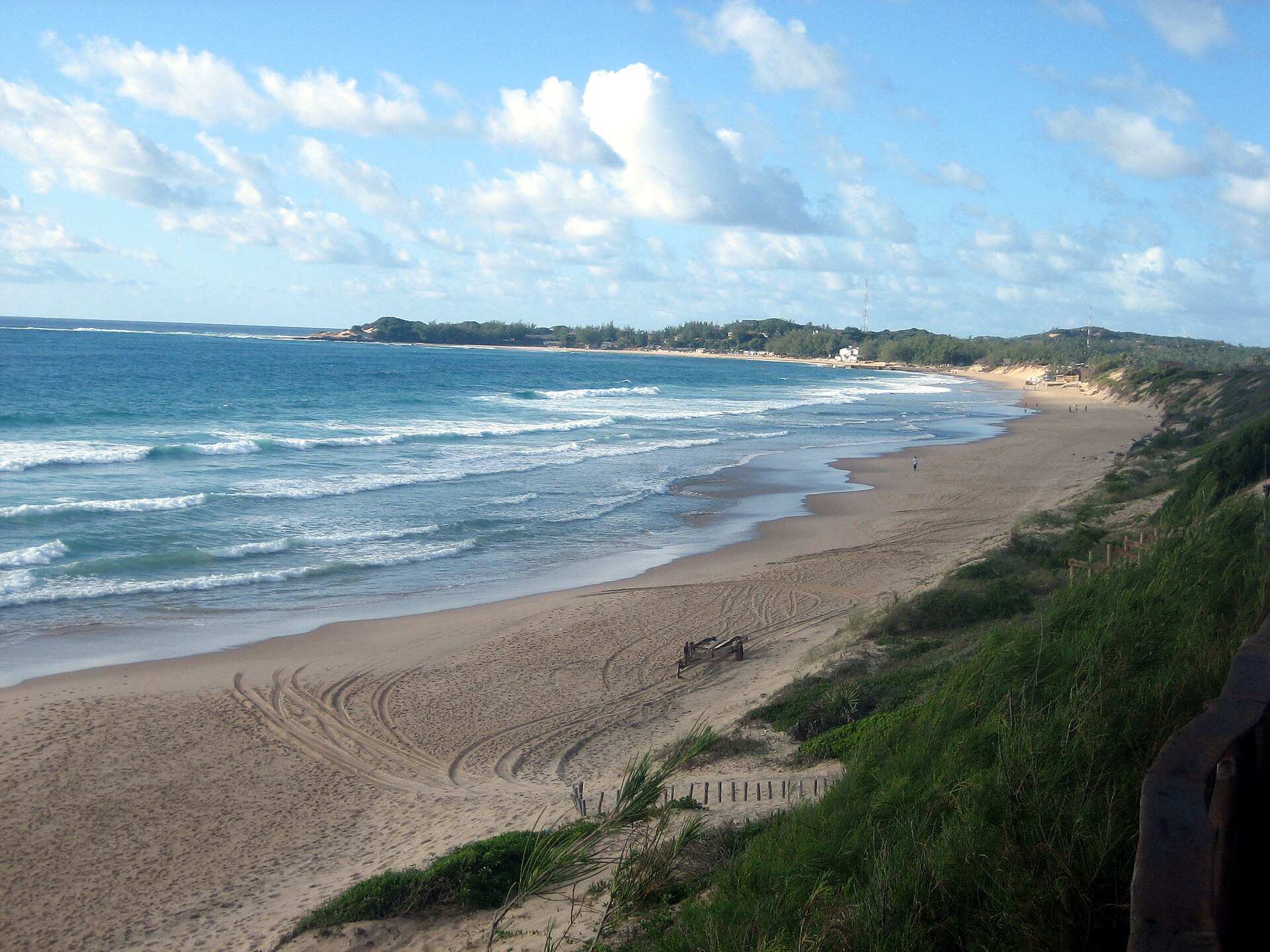
Tofo is the busiest beach village on this coast, with a lively centre, dive centres and a long crescent beach. It is known for ocean life such as whale sharks and manta rays, although sightings are never guaranteed.
It works if you want diving or ocean safaris, a sociable village with places to eat, and a beach you can walk to.
It works less well if you want complete quiet; Tofo can be busy, especially in holiday periods.
Read the full guide: Tofo travel guide.
Barra
Barra sits at the tip of the peninsula, where the ocean meets a lagoon and mangrove channels.
It works if you want a mix of ocean beach and calmer lagoon water, or a quieter alternative close to Tofo.
It works less well if you want to walk to a village centre; places are spread out along the peninsula.
Read the full guide: Barra travel guide.
Inhambane
Inhambane town is one of the oldest settlements on the coast, with colonial-era buildings, a market and a waterfront facing Maxixe.
It works if you are interested in history and town life, want a practical base near the airport, or want to combine town and beach.
It works less well if you want to wake up on the beach; the ocean beaches are out on the peninsula.
Read the full guide: Inhambane travel guide.
Guinjata
Guinjata is a small bay south of Tofo with a quieter, lodge-based atmosphere.
It works if you want a quieter base for diving and beach time without Tofo’s crowds.
It works less well if you want a village with shops and restaurants to walk to.
Read the full guide: Guinjata travel guide.
Ocean encounters: Marine life encounters should follow responsible guidelines — keep distance, do not touch or chase animals, and choose operators who brief you properly.
Závora
Závora, further south, is a remote stretch with a lighthouse and reef diving.
It works if you want remoteness and the ocean, and plan to stay several nights.
It works less well if you rely on public transport or want services close by; access includes sandy roads.
Read the full guide: Závora travel guide.
Morrungulo
Morrungulo is a long, quiet beach north of Massinga, reached off the EN1.
It works if you are driving the coast road and want a peaceful beach stop.
It works less well if you want nightlife or a busy dive scene.
Read the full guide: Morrungulo travel guide.
Pomene
Pomene is a quiet coastal reserve area with mangroves, estuary and beach.
It works if you want nature and a sense of being off the beaten track.
It works less well if you do not have suitable transport; the access road involves sand.
Read the full guide: Pomene travel guide.
Do you need a car?
Not always. Tofo and Inhambane town can be reached by road transport and transfers from Inhambane airport, and Tofo is walkable once you arrive. For Barra, Guinjata, Závora, Morrungulo and Pomene, a vehicle helps — and sandy access roads often mean a 4×4 or a transfer arranged with your accommodation.
Which base suits you
| If you want… | Base yourself in… | Why |
|---|---|---|
| Diving and a lively village | Tofo | Dive centres and a walkable centre |
| Beach plus lagoon | Barra | Ocean on one side, lagoon and mangroves on the other |
| History and town life | Inhambane | Old port town on the bay |
| Quiet diving base | Guinjata or Závora | Smaller, lodge-based bays |
| A quiet stop on the EN1 | Morrungulo | Easy detour from the main road |
| Nature and seclusion | Pomene | Reserve coast with mangroves |
What to do next
Once you have chosen a base, read its destination guide for what to see, when to go and how to get there, then browse places to stay in the region. The Inhambane Coast region guide gives the wider picture, and our Mozambique accommodation guide explains how to choose between regions.
Destination guides in this region:
Sources
- UK FCDO travel advice for Mozambique
- US State Department travel advisory for Mozambique
- ANAC — Mozambique’s National Administration of Conservation Areas
Travel advice and access notes were checked on 19 September 2026. Park rules, border hours and transport change; check the official source before you travel.
Browse Inhambane Coast accommodation
Browse Inhambane Coast places to stay in our accommodation catalogue, or start from all Mozambique accommodation.