
Southern Mozambique packs a capital city, a string of beach villages close to the South African border, islands in Maputo Bay and a coastal national park into one relatively compact region. That variety is exactly why the choice of base matters: a hotel in central Maputo and a beach camp at Ponta do Ouro are different trips, not different price points.
This guide explains how the region is laid out and what each base is genuinely good and less good for. It does not list properties, prices or availability — it is here to help you decide where to look before you look at places to stay.
In this guide
How Maputo & Southern Coast is laid out
Maputo sits on the western shore of Maputo Bay, the natural centre of the region. The KaTembe bridge crosses the bay’s inner channel to the south side, and the road south from there runs towards Maputo National Park, Ponta do Ouro and the South African border near Kosi Bay.
North of the city, the coast bends away past the Macaneta peninsula towards Bilene’s lagoon, Xai-Xai at the mouth of the Limpopo River and the lakes-and-dunes coast around Chidenguele. Inhaca Island and the Machangulo peninsula close off the eastern side of Maputo Bay and are reached by boat or, for Machangulo, sand tracks.
Maputo
Maputo is the easiest first or last night in the country: international flights, the widest range of hotels and guesthouses, restaurants, museums and the old Baixa district. Most visitors stay in the Polana, Sommerschield or Baixa areas, or along the Costa do Sol seafront.
It works if you are arriving or departing by air, want restaurants and city life, or need a practical base for a day or two before heading to the coast.
It works less well if you came for beaches and quiet: Maputo is a working capital with traffic, and the bay here is not the swimming-and-snorkelling coast most visitors picture.
Read the full guide: Maputo travel guide.
Ponta do Ouro
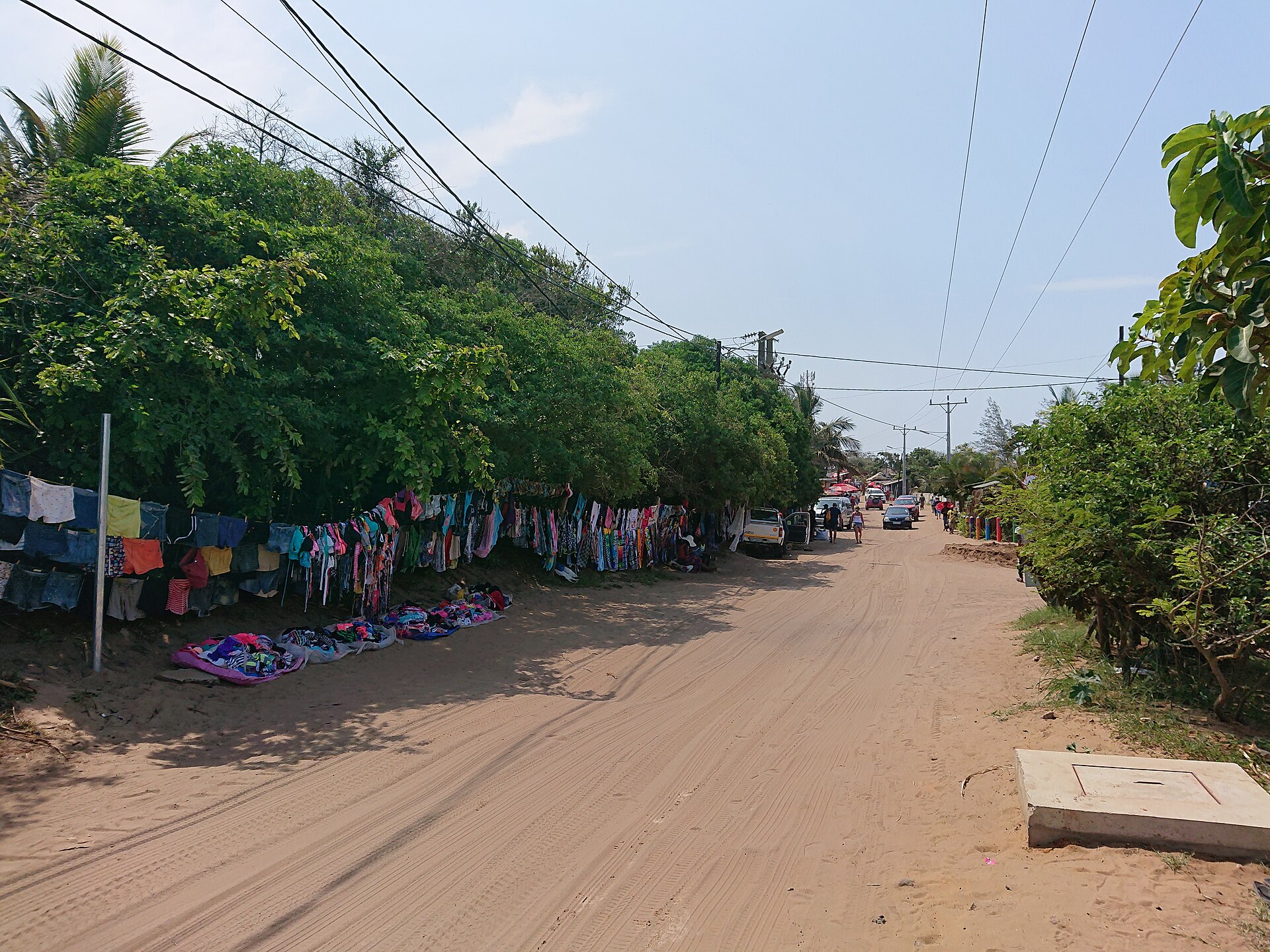
Ponta do Ouro is the southernmost beach village, close to the South African border and inside the Ponta do Ouro Partial Marine Reserve. It is known for diving, surf and ocean excursions, and for a relaxed, sandy village feel.
It works if the ocean is the point of the trip — diving, dolphin and ocean excursions under reserve rules, or simply a beach week — and especially if you are driving in from South Africa.
It works less well if you want a city base or plan to see several regions quickly; much of the village is on sand, and holiday weekends can be busy with cross-border visitors.
Read the full guide: Ponta do Ouro travel guide.
Maputo National Park
Maputo National Park (formerly the Maputo Special Reserve) combines coastal lakes, grassland and a long protected shoreline. Staying inside or on the edge of the park is a wilderness choice rather than a beach-village one.
It works if you want wildlife, birds and empty beaches, and you are comfortable with park rules, limited facilities and sandy access that generally calls for a suitable 4×4 or an operator transfer.
It works less well if you want restaurants, nightlife or a simple drive-up stay. Check access conditions and park entry requirements with the park before you travel.
Read the full guide: Maputo National Park travel guide.
Inhaca Island
Inhaca Island lies across Maputo Bay from the capital. It has a small village, seagrass and reef habitats and a slower pace than the mainland coast.
It works if you want an island feel close to Maputo, and are happy to plan around boat or flight connections.
It works less well if you want to move around a lot: getting on and off the island depends on transport schedules and sea conditions.
Read the full guide: Inhaca Island travel guide.
Machangulo
Machangulo is the peninsula opposite Inhaca, with Santa Maria village near its tip. It is quiet, sandy and oriented to the bay and the ocean.
It works if you want seclusion on the water and plan to stay put for several nights.
It works less well if you do not have (or do not want) a boat transfer or a capable 4×4; access is the main limitation here.
Read the full guide: Machangulo travel guide.
Check before you travel: Border-post hours, park entry rules and marine-reserve regulations can change. Confirm current details with the park or reserve authority and your accommodation before you set off.
Bilene
Bilene sits on a large, calm lagoon separated from the ocean by dunes. It is a popular domestic holiday spot with water sports and family-friendly shallow water.
It works if you want calm water, a straightforward beach break north of Maputo, or an easy first coastal stop on a road trip towards Inhambane.
It works less well if you are looking for reef diving or remote wilderness; Bilene is a lagoon-and-holiday-town experience.
Read the full guide: Bilene travel guide.
Xai-Xai
Xai-Xai is the provincial town near the mouth of the Limpopo River, with a beach area at Praia do Xai-Xai. It is a practical stop on the EN1 coastal route.
It works if you are breaking a longer journey along the coast and want services, fuel and a beach nearby.
It works less well if you want a destination in its own right for a long stay; most visitors use it as a stopover.
Read the full guide: Xai-Xai travel guide.
Macaneta
Macaneta is a peninsula north of Maputo, across the Incomati River, with a long ocean beach.
It works if you want a beach escape near the capital without committing to a long road trip.
It works less well if you want village amenities; it is a small, spread-out beach area and access involves the river crossing and sandy stretches.
Read the full guide: Macaneta travel guide.
Chidenguele
Chidenguele lies between Xai-Xai and the Inhambane coast, where freshwater lakes sit behind high coastal dunes.
It works if you want a quiet coastal stop with lakes and dunes on a road trip north.
It works less well if you want a lively beach town; this is a quiet, small-village stretch of coast.
Read the full guide: Chidenguele travel guide.
Do you need a car?
You do not need a car in Maputo, where taxis and transfers are the usual way to get around. For Ponta do Ouro, Maputo National Park and Machangulo, the real question is sand: many lodges and camps are reached on sandy tracks, so either travel with a suitable 4×4 and experience of driving in sand, or arrange transfers through your accommodation. The EN1 north towards Bilene and Xai-Xai is a sealed main road, but side roads to beaches may not be.
Which base suits you
| If you want… | Base yourself in… | Why |
|---|---|---|
| A city base with flights, restaurants and museums | Maputo | Widest range of places to stay; practical first and last nights |
| Diving and ocean excursions | Ponta do Ouro | Inside a marine reserve with established dive activity |
| Wildlife and wild beaches | Maputo National Park | Protected coastline and lakes; limited facilities |
| An island close to the capital | Inhaca Island | Reached by boat or air from Maputo |
| Calm water for families | Bilene | Large sheltered lagoon |
| A stopover on the coast road | Xai-Xai or Chidenguele | On or near the EN1 route north |
What to do next
Once you have chosen a base, read its destination guide for what to see, when to go and how to get there, then browse places to stay in the region. The Maputo & Southern Coast region guide gives the wider picture, and our Mozambique accommodation guide explains how to choose between regions.
Destination guides in this region:
- Maputo
- Ponta do Ouro
- Maputo National Park
- Inhaca Island
- Machangulo
- Bilene
- Xai-Xai
- Macaneta
- Chidenguele
Sources
- UK FCDO travel advice for Mozambique
- US State Department travel advisory for Mozambique
- Lubombo Transfrontier Conservation Area (Maputo National Park) — Peace Parks Foundation
- ANAC — Mozambique’s National Administration of Conservation Areas
Travel advice and access notes were checked on 19 September 2026. Park rules, border hours and transport change; check the official source before you travel.
Browse Maputo & Southern Coast accommodation
Browse Maputo & Southern Coast places to stay in our accommodation catalogue, or start from all Mozambique accommodation.